What if light could do more than help us see? Scientists are looking into whether certain wavelengths of red and near-infrared light can affect the body’s cells, including brain cells. This field is called photobiomodulation (PBM), and it is gaining attention in neuroscience and brain health research.
From brain energy production to memory and attention, researchers are exploring whether light-based approaches could play a role in brain health. At NY Neurofeedback, which offers personalized brain health services such as photobiomodulation, QEEG brain mapping, and neurofeedback, this is an interesting area to follow.
What Is Photobiomodulation?
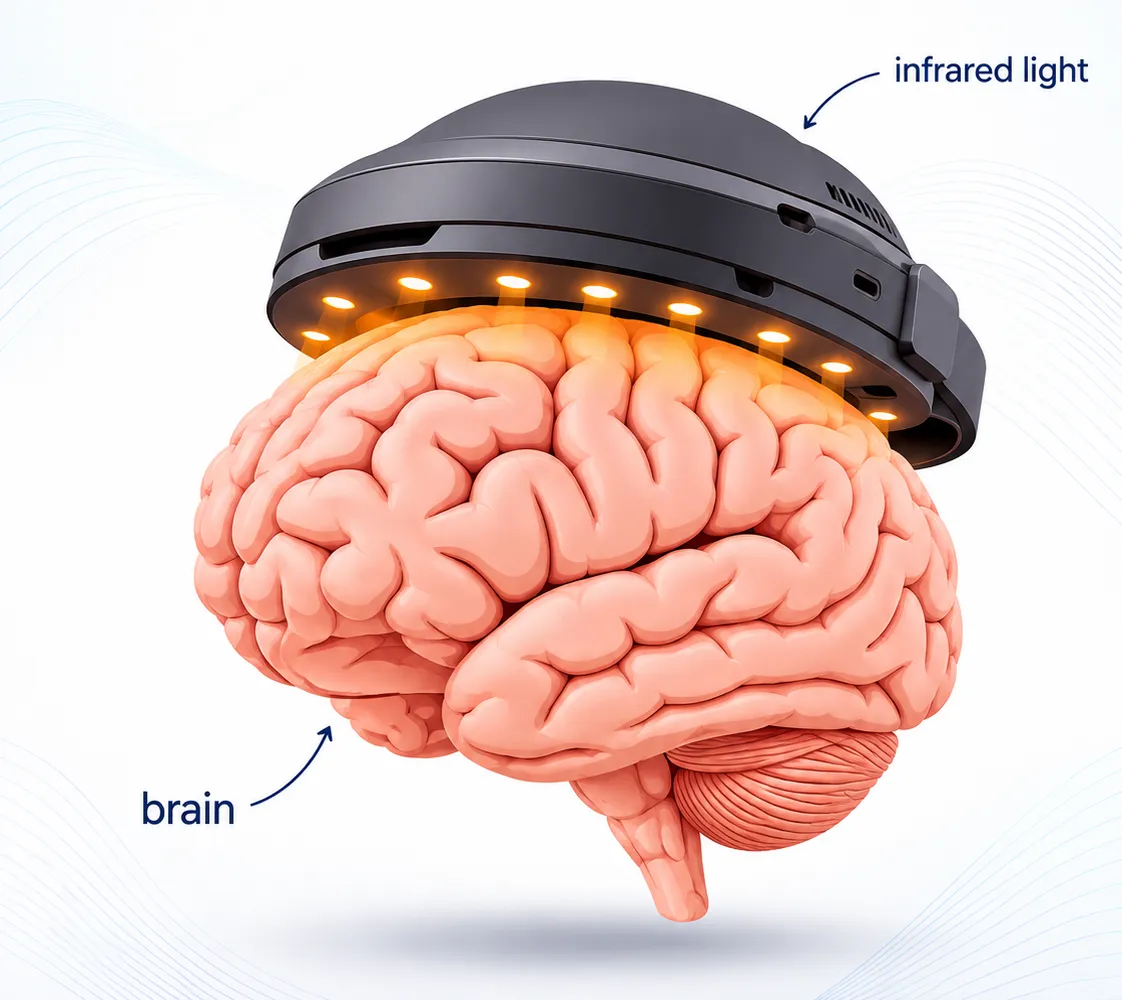
Photobiomodulation is a non-invasive method that uses specific wavelengths of red or near-infrared light to interact with biological tissue.
While ordinary light cannot reach some layers of tissue, near-infrared light is able to penetrate further. Researchers are investigating how selected wavelengths and energy levels affect cellular functions.
One cell structure under investigation is the mitochondria, the energy-producing part of the cell responsible for making ATP, which cells use as their energy source. Some studies suggest that light can affect mitochondrial function and other cellular signaling processes.
How Does Near-Infrared Light Interact With Brain Cells?
The brain needs a constant supply of energy for communication between neurons, information processing, and everyday activities.
One proposed mechanism of photobiomodulation involves an enzyme in the mitochondrial respiratory chain called cytochrome c oxidase. Light at certain wavelengths is believed to affect this system and cellular energy processes.
Scientists have started researching transcranial photobiomodulation (tPBM), which delivers light through the scalp to the brain, and its possible effects on:
- Mitochondrial activity and cellular metabolism
- Blood flow and oxygen consumption in the brain
- Cellular signaling and the oxidative stress response
- Brain activity related to attention and memory
This is an area of ongoing research. The exact mechanism of action, the best treatment protocols, and the clinical significance are still being studied.
Can Photobiomodulation Improve Memory, Focus, and Cognitive Function?
Research has not settled this yet, but it is one of the most closely studied questions about photobiomodulation. Researchers are looking at its possible connection with several aspects of cognition:
- Memory: the effect of light on working memory and the ability to store and use information.
- Attention: whether light can affect the processes involved in concentration.
- Processing speed: whether stimulation influences how quickly a person processes information and completes tasks.
- Executive functions: skills such as planning, organizing, decision making, and managing attention.
A 2025 systematic review and meta-analysis of 24 randomized controlled trials with 820 participants found some positive changes in several measures of cognition. Still, differences between the trials and their limitations need to be taken into account.
It is important to keep in mind that these findings do not show that photobiomodulation can make everyone smarter or raise an IQ score by a certain number of points.
What Is the Difference Between Photobiomodulation and Neurofeedback?
They are two distinct techniques. Photobiomodulation uses light of specific wavelengths that interacts with cells in biological tissue. Neurofeedback uses real-time information about the brain’s electrical activity to give the person visual and audio feedback during training.
Both are being studied for different purposes, and they are not interchangeable. For a side-by-side look, read Photobiomodulation vs. Neurofeedback: Two Approaches to Brain Health. At NY Neurofeedback, each patient’s needs are understood before any service is recommended.
Is Photobiomodulation Suitable for Everyone?
Not necessarily. Photobiomodulation is still an emerging field, and results depend on many factors, such as wavelength, light intensity, exposure time, application method, and personal circumstances.
A protocol that worked well in one group will not necessarily work for everyone. Further studies are needed to determine the right applications, delivery methods, and realistic results.
Anyone considering any type of light therapy for the brain should talk with a doctor about the benefits, risks, and other aspects of the treatment. It should never replace medication or standard treatment.
Exploring Photobiomodulation at NY Neurofeedback
NY Neurofeedback provides individualized care for brain health concerns. Services include:
- Photobiomodulation (PBM): a light-based approach that uses selected wavelengths.
- QEEG brain mapping: an assessment that records and analyzes your brain’s electrical activity.
- Neurofeedback: training that uses feedback from brain activity measurements.
- Psychological treatment: care that takes your individual concerns and goals into account.
The clinic is led by Dr. Merlyn Hurd, PhD, QEEG-DL, and works with children, teens, and adults in NYC and Long Island. The goal is to help you understand the different options and decide which one suits you best.
Frequently Asked Questions About Photobiomodulation
What wavelength of light is used for brain photobiomodulation?
Several wavelengths have been used in research, including 810 nm and 1,064 nm. Wavelength and energy parameters differ between studies and devices.
Does near-infrared light penetrate the brain?
Some near-infrared light can pass through the scalp and skull. How much reaches brain tissue depends on the wavelength, device parameters, tissue characteristics, and treatment parameters.
Can photobiomodulation raise one’s IQ?
At the moment, there is no evidence that photobiomodulation increases IQ predictably and reliably. Some research has looked at specific cognitive measures, but those results should not be taken as proof that it increases intelligence for everyone.
Is photobiomodulation similar to neurofeedback?
No. Photobiomodulation is based on the interaction of light with biological tissue, while neurofeedback provides real-time feedback on brain activity during training.
Where can I learn more about photobiomodulation in NYC?
NY Neurofeedback provides photobiomodulation along with QEEG brain mapping and neurofeedback. People in NYC and Long Island can contact NY Neurofeedback to learn more and arrange an initial consultation if needed.
Explore Emerging Approaches to Brain Health
Photobiomodulation is a promising area of science, especially for researchers studying cellular energy, brain function, and cognition. Even though some findings are encouraging, more studies are needed to understand its potential.
If you want to know more about photobiomodulation, QEEG brain mapping, and neurofeedback, NY Neurofeedback can help you learn about its services. You can book a consultation or contact the team directly.
Contact NY Neurofeedback
Website: www.nyneurofeedback.com
Phone: +1 (917) 405-8168
Email: merlynh@nyneurofeedback.com
This article is for informational purposes only and is not a substitute for professional medical advice, diagnosis, or treatment.
Read our next blog — Why Is It So Hard to Concentrate? Understanding Attention and Brain Function